Health & Mobility

Advertorial

Why “Wear and Tear” May Not Explain Stiff Joints—And the Drying “Joint Jelly” Researchers Are Studying Instead

A closer look at the protective fluid inside knees, hips, and hands—and why common supplements often fall short.

By Laura Jenkins, Health Contributor

Updated Recently

a

For decades, adults over 50 heard the same explanation for stiff mornings, creaky knees, and tight hands: ordinary “wear and tear.” Use a joint long enough, the theory went, and cartilage wears down like an old tire.

Recent Ivy League research has challenged that idea. After examining thousands of ancient skeletons, scientists expected severe joint breakdown. Instead, they found remarkably intact joint spaces—pointing to a deeper factor behind aging joints.

The Protective Fluid Acting Like “Engine Oil”

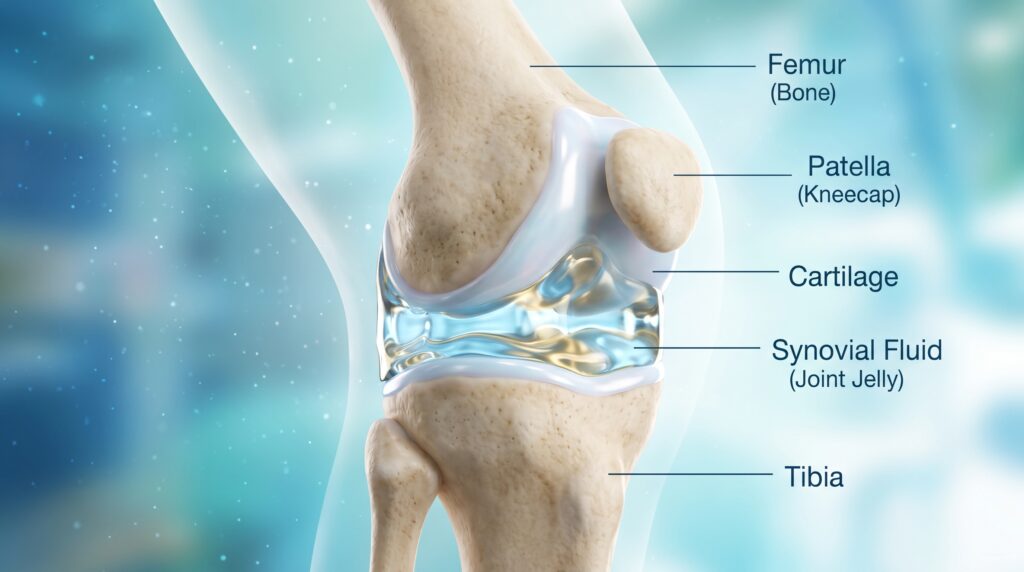
Between the bones in every knee, hip, shoulder, and finger lies synovial fluid—a thick, slippery cushion researchers informally call “Joint Jelly.”

In youthful joints, this fluid does three essential jobs. It coats cartilage so joints glide smoothly without friction. Because cartilage lacks its own blood supply, it delivers vital oxygen and nutrients. And it forms a barrier shielding joint tissue from everyday inflammatory stress.

Why That Cushion Quietly Dries Out After 30

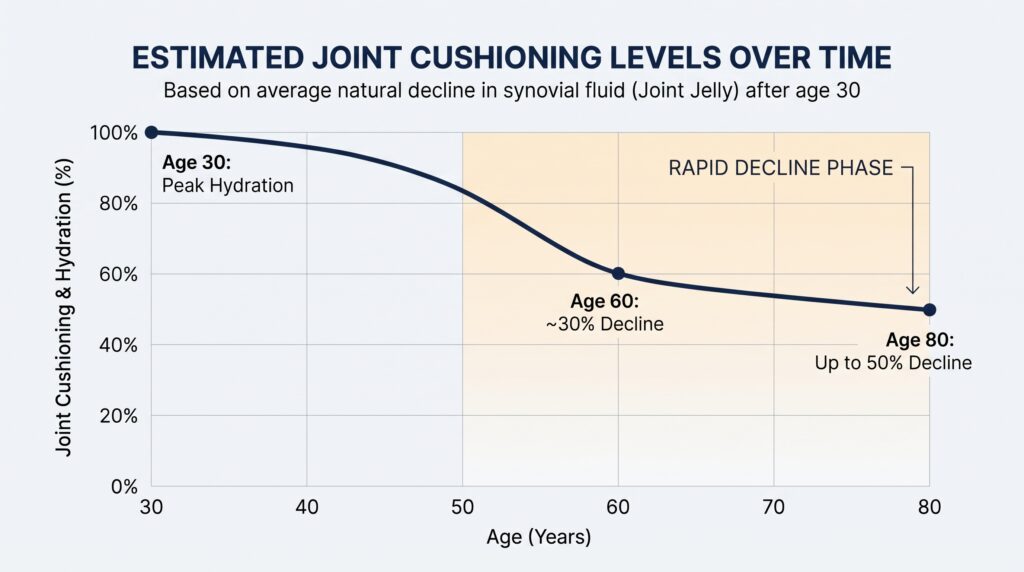
Starting around age 30, the body steadily loses a critical water-binding molecule that keeps Joint Jelly thick and bouncy—roughly 1% every year. By 60, adults may have lost 30% or more, and modern environmental factors accelerate the drop.

As that fluid thins and dries, cartilage loses its protection. That also explains why popular staples like glucosamine and chondroitin frustrate so many adults: supporting cartilage while ignoring dry synovial fluid is like rotating a car’s tires without adding engine oil.

The Japanese Village Clue—And a 10-Second Routine

While investigating this gap, former U.S. Army physician Dr. Mark Weis studied a remote mountain village in Japan where seniors in their 80s and 90s still farm and bend freely—with scans showing wide, healthy joint spaces rarely seen in the West.

Researchers linked their mobility to one unusual food in their daily diet that supports Joint Jelly. Because eating enough of it every day isn’t practical in the U.S., Dr. Weis turned to clinical research to uncover a simpler, faster way to support that same fluid at home.

What Dr. Weis Reveals in This Short Video

Before spending another dollar on standard pharmacy blends, set aside a few quiet minutes to watch Dr. Weis’s briefing carefully. Inside, he covers:

1- The side-by-side X-ray comparison between an average American senior and a villager from Japan—and the overlooked space doctors are now studying.

2- The “guardian molecule” that holds up to 1,000 times its weight in water, and why modern life drains it faster than ever.

3- Why glucosamine and chondroitin failed in a $12 million clinical study—and what researchers focus on instead.

4- The 10-second daily habit thousands of adults over 50 now use at home to support thicker, better-lubricated Joint Jelly.

Silence distractions for the next few minutes and tap below to watch Dr. Weis’s official presentation while it remains online.

Laura Jenkins is a health and lifestyle writer with over 15 years of experience covering nutrition, mobility, and active aging. A wife, mother, and grandmother, she writes to help older adults explore practical, everyday wellness habits.

ADVERTORIAL & MARKETING DISCLOSURE: This website is an advertisement and not a news publication. Any photographs of persons used on this site are models. The owner of this site receives compensation for clicks or purchases made through links on this page. HEALTH & FDA DISCLAIMER: The information provided on this page is for informational and educational purposes only and is not intended as a substitute for professional medical advice, diagnosis, or treatment. Always consult your physician or qualified healthcare provider before starting any new dietary supplement or health regimen. These statements have not been evaluated by the Food and Drug Administration (FDA). Products featured are not intended to diagnose, treat, cure, or prevent any disease. Individual results may vary. PLATFORM DISCLAIMER: This site is not a part of the Facebook website, Meta Platforms, Inc., or Google LLC. Additionally, this site is NOT endorsed by Facebook or Google in any way.